Cycling Routes in France
La Loire à Vélo, ViaRhôna, La Vélodyssée: France boasts one of Europe's densest cycling networks, with over 20,000 km of signposted routes and one of the EU's most ambitious development programmes. From the flat Loire Valley through the Atlantic coast to the passes of the Alps and Pyrenees, the country offers routes for every kind of cycling trip, from family outings to multi-week bikepacking expeditions.

The national programme La France à Vélo ties these routes together into a coherent network. The main long-distance cycle paths follow the great rivers (Loire, Rhône, Seine), the coastline, or the wine regions of Burgundy and Alsace. Many sections are voies vertes, car-free paths on former railway lines, complemented by a growing network of cycling bridges and safe regional links. Several routes form part of the EuroVelo network.
Then there's the infrastructure around it: the Accueil Vélo certification for cyclist-friendly accommodation, solid rail connections with bike transport, and a dense network of rental stations. France is one of the few countries in Europe where cycling tourism is treated systematically as an economic sector, with the corresponding quality on the ground.
Table of Contents

Accommodation
When planning a cycling route in France, look for establishments with the Accueil Vélo certificate. This nationwide certification system distinguishes accommodation, restaurants, tourist offices and attractions that are particularly cyclist-friendly.
Accueil Vélo certified facilities meet key criteria for two-wheeled travelers:
- located within 5 km of an official cycling route,
- offer secure bicycle storage (lockable room or garage),
- provide basic equipment including repair tools, pump, and information about local routes,
- make it possible to dry clothes and gear,
- accept cyclists for one night without requiring a longer stay,
- provide information about the nearest bike shops and assistance points.
The Accueil Vélo network includes thousands of facilities throughout France, from boutique hotels and gîtes (rural guesthouses) to campsites and hostels. You'll find the highest concentration of certified places along popular routes such as La Loire à Vélo, ViaRhôna or La Vélodyssée, making multi-day trip planning much easier.
Wild camping regulations in France are quite restrictive. Setting up camp outside designated campsites is generally prohibited, especially in national parks, nature reserves and near beaches and tourist attractions. However, some municipalities tolerate wild camping for one night, provided you pitch your tent late in the evening and pack up at dawn. In practice, it's always best to ask the landowner for permission or use official campsites, which are very numerous and often inexpensive throughout France.
How to Get to France with Your Bike?

Getting to France from elsewhere in Europe offers several convenient options. The most practical choice for cyclists is rail connections. Direct trains or connections with transfers are available to Paris, Strasbourg, Lyon or Nice. SNCF (French national railways) allows bike transport on most regional trains (TER) for a small fee or free of charge. On TGV trains, a reservation for a special bike space is required or transport in a bag.
International buses such as FlixBus are becoming increasingly popular, offering bike transport in special luggage compartments on selected routes. Check the availability of this option in advance and make a reservation. Additionally, on our Veloplanner website you can enable a special overlay that displays FlixBus stops directly on the map, making travel planning easier.
An alternative is driving with a bike rack. Depending on your starting point and destination in France, journey times vary considerably. Remember about motorway vignettes and toll road charges when planning your route.
Rent or Bring Your Own Bike?
France has a very developed network of bike rental shops. In larger cities, public bike systems operate (Vélib' in Paris, Vélo'v in Lyon), and along popular tourist routes you'll find numerous points offering trekking, mountain, road bikes and e-bikes. Many rental shops cooperate with the Accueil Vélo network, facilitating trip organization with the option to return the bike at a different location.
Renting a bike for several days costs from €15 to €30 per day for a traditional bike and from €25 to €50 for an e-bike. More and more companies also offer long-term rentals with the option of returning to a different location, an ideal solution for point-to-point routes.
How Much Does a Week-Long Cycling Trip in France Cost?
The costs of a cycling trip in France are similar to Western European levels, although they may vary depending on the region:
- accommodation: camping from €10–20 per night, guesthouses and gîtes from €40–70 per room,
- food: €20–40 daily (supermarket shopping is cheaper than restaurants),
- attractions: entrance tickets to châteaux and museums, wine tastings, ferries typically €80–150 per week.
Budget accordingly based on your travel style and chosen region. Camping and self-catering will keep costs lower, while hotel stays and restaurant meals will increase your daily expenses.
VeloPlanner is now on mobile!
Download our mobile app to explore cycling routes and plan your rides on the go.


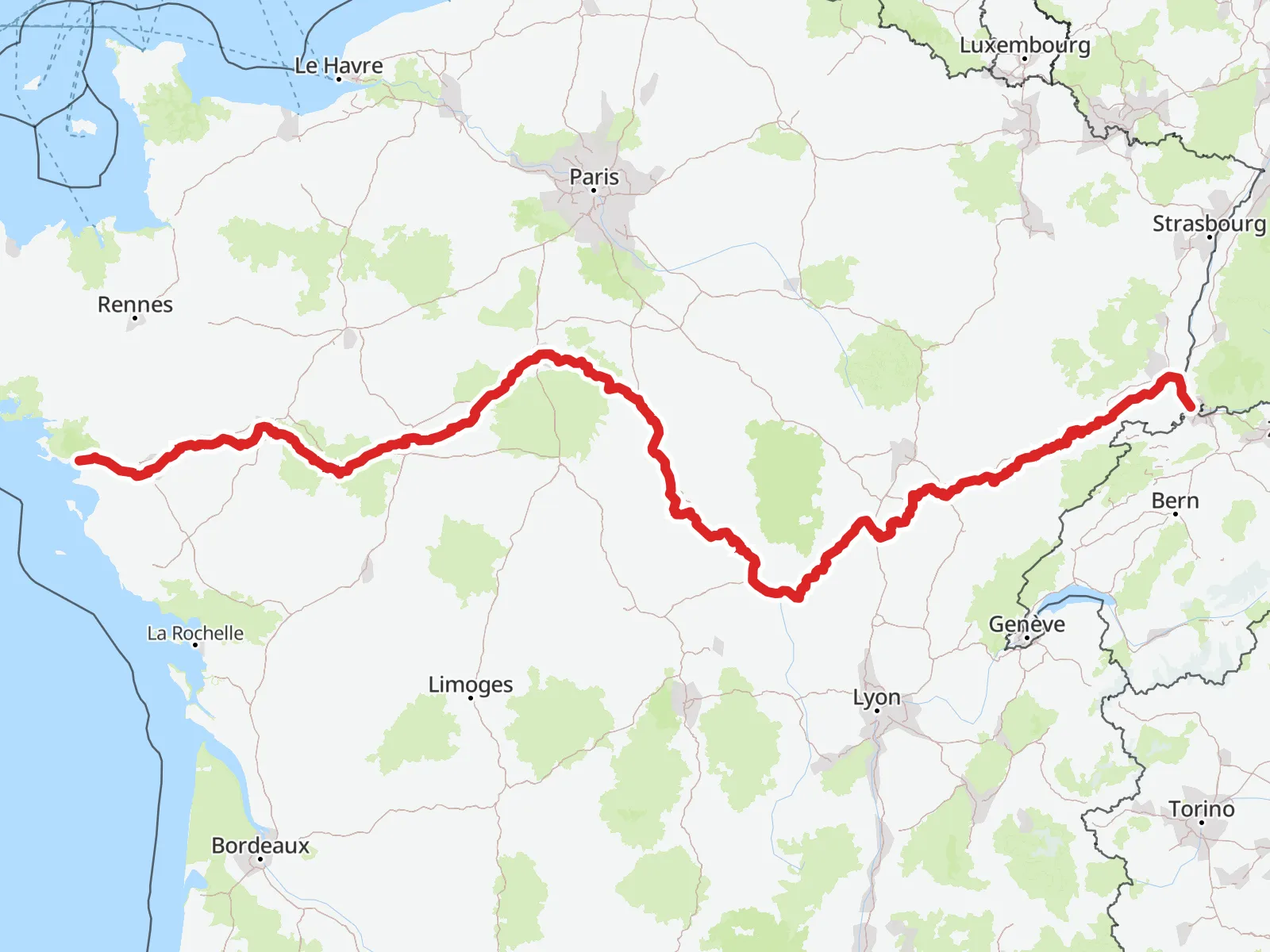
Popular cycling routes - France




States & Provinces
Ile-de-FranceCorsicaOccitaniaAuvergne-Rhône-AlpesNouvelle-AquitaineBourgogne – Franche-ComtéProvence-Alpes-Côte d'AzurPays de la LoireHauts-de-FranceGrand Est